



Cracking County Lines: The South Wales Police Approach

In just nine months, South Wales Police has dismantled 63 county lines - compared with only three identified four years ago - while freeing 3,276 analyst hours. How? Through the Chorus Intelligence Suite (CIS).

South Wales Police icon

South Wales Police

An Introduction

In 2023, South Wales Police began reviewing how it identified, investigated, and disrupted county line criminality. Chief Officer direction was clear: drive efficiency, increase effectiveness, and leverage technology for better outcomes. Detective Superintendent Matthew Cox led the assessment, trial, and adoption of the CIS. Its first-year impact includes:

  • Empowering frontline staff to access and interpret data independently, cutting investigation delays and enabling faster disruption of county lines activity.
  • Freeing analysts from routine data work, allowing them to focus on complex cases and deliver intelligence that drives high-impact operational decisions.
  • Unlocking hidden evidence through powerful cross-search, connecting historical and current data to reveal criminal networks, support prosecutions, and strengthen cases in court.

Empowering investigations with the CIS

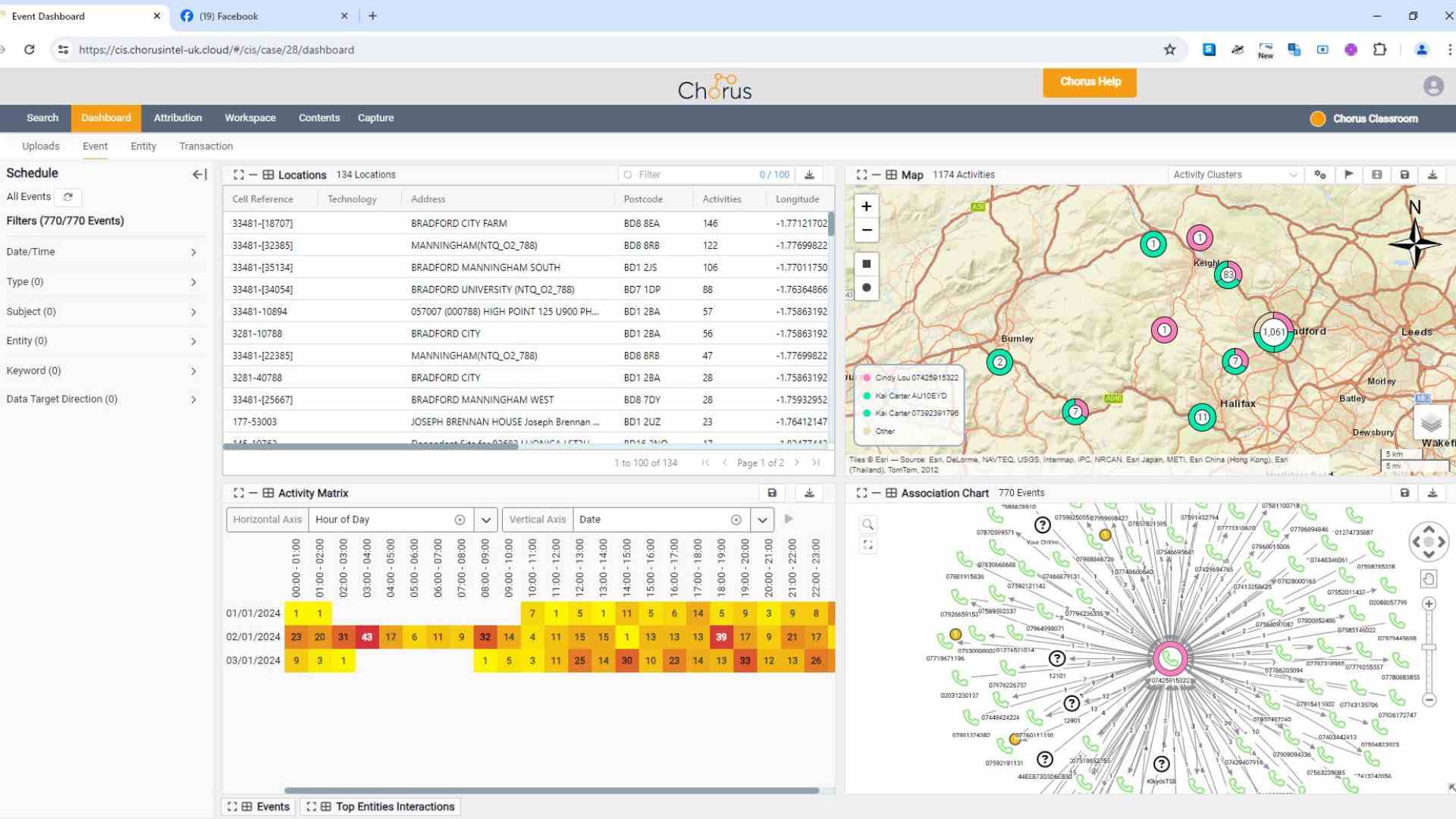
The Chorus Intelligence Suite (CIS) is a self-serve digital investigation platform that enables users to extract actionable intelligence from complex data through cleansing, analysis, search, enrichment, and evidential reporting.

Within South Wales Police, it is primarily used by intelligence and organised crime teams, who in turn support the wider Basic Command Units (BCUs). Access is deliberately spread across teams – including communications data investigators (SPOCs), researchers and frontline officers – to maximise operational impact.

The Solution

Unlocking Team-Wide Intelligence Capability

Reducing reliance on analysts was a key driver for adopting the CIS. Its intuitive, self-serve tools, empower frontline roles to interpret data directly. Previously, they either waited for analysts to review data or tried to interpret it manually, both causing delays and limiting insight.

Now, enquiries progress in real time, while analysts are freed to focus on higher-level interpretation, pattern recognition, complex problem-solving, and the production of strategic intelligence. With analysts often stretched by workload and major incidents, the CIS ensures their skills are focused where they have the most impact.
 

Just as we equip officers with pens, notebooks, or laptops to record information, we must provide them with the right tools to interpret and act on it effectively. Without these tools, much of this valuable data goes underutilised. The CIS ensures officers can unlock the evidential value of the information they collect, turning raw data into actionable intelligence.

Matthew Cox, Detective Superintendent, South Wales Police

The Solution

The Power of Collections

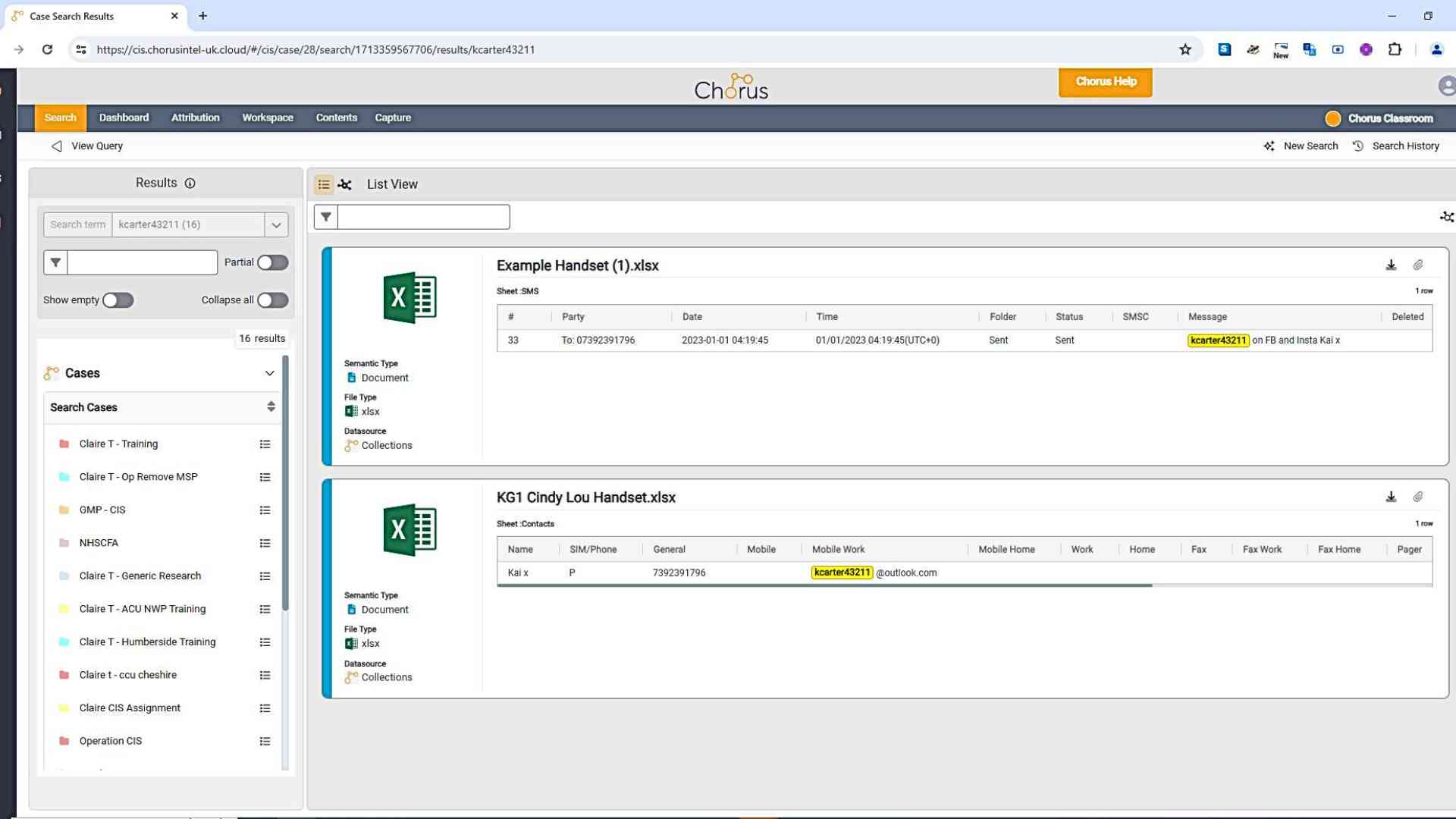
Through its ‘Collections’ portal, the CIS automatically uploads, indexes, and makes vast volumes of data searchable, including communications, handset downloads, and structured or unstructured files like Excel, Word, and PDFs.

South Wales Police centralises suspect data from production orders, transcripts, and internal files. The real power of Collections lies in its cross-search capability. It allows users to query any uploaded data against everything else in the portal. This has been a game changer for the force, uncovering previously unknown connections across crimes such as murder, child sexual and criminal exploitation, robbery, burglary, and more.

Collections has often uncovered evidence from past investigations, linking phones and communications data to suspects linked in current serious offences. While this information already existed, there was no systematic way to access or analyse it. By surfacing these connections, Collections turns previously siloed data into actionable intelligence.


In just one year, the results have been significant. Automated search processes are projected to save up to 3,276 hours of analyst time – time that can now be redirected into investigations and safeguarding the public – while already driving increased efficiency and more positive investigative outcomes.

Matthew Cox, Detective Superintendent, South Wales Police

The Solution

From Data Ingestion to Operational Escalation

In county lines investigations, once data is uploaded into the CIS, users follow a structured workflow:

  1. Map phone movements – Track device usage and movement to identify patterns and connections.
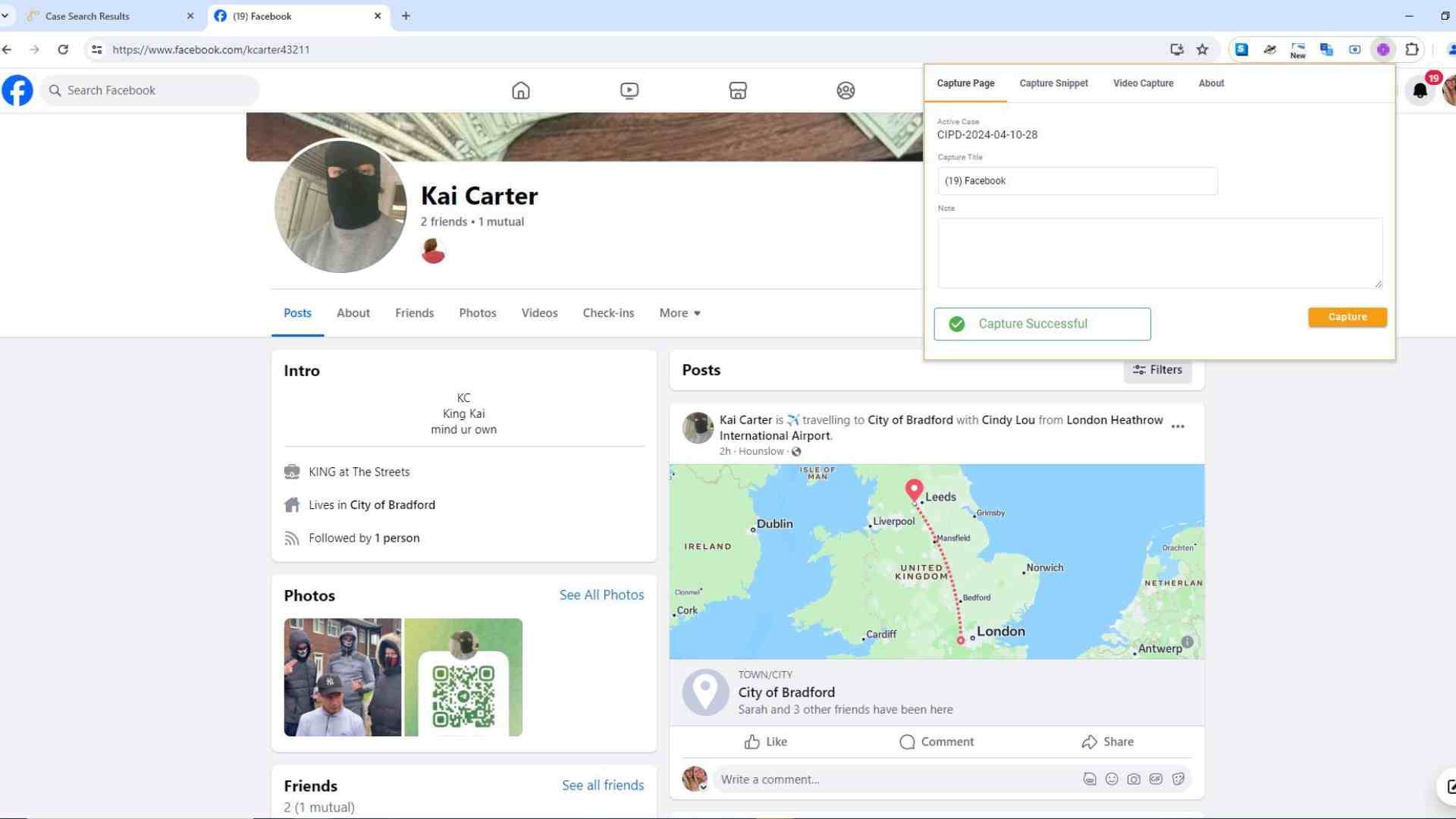
  2. Attribute devices to individuals – Collections and federated search query entities such as phone numbers across social media platforms and consented databases, uncovering intelligence such as images, emails and addresses. The search function is especially useful in vulnerability cases. For example, a search on a seized phone may reveal a WhatsApp image, which can then be processed through facial recognition software to identify the individual. The CIS also connects to third-party services via API, allowing the force to cross-check data like phone lines linked to individuals.
  3. Assess line value – Determine links to vulnerability or organised crime to guide priorities.
  4. Prioritise enforcement – High-harm cases, such as child exploitation, drug trafficking, cuckooing, contaminated drugs, or serious violence, are acted on immediately. Lines linked to wider criminal activity are treated as part of an organised crime group (OCG), scored using MoRiLE, and escalated from county lines teams to larger investigations managed by organised-crime teams.


Operational Impact and Demand Management

Since adopting the CIS, BCU teams identify county lines activity much more efficiently. The intelligence they produce is often strong enough to support more intrusive tactics against controllers. The CIS clearly evidences criminality, such as high-value phone numbers across multiple areas, supporting applications for further authorities and use of investigative tactics.

Its effectiveness has reshaped tasking and escalation, ensuring controllers receive proper focus. CIS intelligence is so robust that arrests often recover drugs, cash, and phones, with 90% of suspects pleading guilty at the first hearing. It has transformed the force’s county lines response, making operations faster, more precise, and highly effective.

The biggest benefit of the CIS is its effectiveness. Just three to four years ago, only three county lines were known in Cardiff. In the past nine months alone, with the support of the CIS, we have identified, tracked, understood, and dismantled 63 lines.

Matthew Cox, Detective Superintendent, South Wales Police

A Force for Funding

South Wales Police has achieved success entirely within its own budget, without extra taskforce support or funding. The CIS allows the force to measure and demonstrate its impact, providing clear, data-driven evidence for funding bids. This has secured strong support from national funding streams, with investment guided by proven operational effectiveness.

Adopting the CIS has transformed South Wales Police’s approach to complex investigations. By giving non-analysts easy access to data and intelligence, operations are faster and more focused, with county lines activity disrupted quickly.

The CIS also boosts strategic decision-making, optimises analyst capacity, and provides measurable evidence for funding. The force’s experience shows how intelligence technology can improve efficiency, protect vulnerable people, and enhance overall policing effectiveness.

What’s crucial to remember is that at the end of every line is vulnerability. Our work has often led to modern slavery and human trafficking charges arising from county lines investigations. This capability has helped position South Wales Police among the top two forces in the UK for county lines impact. Importantly, this ranking reflects our ability to detect and act on county lines, rather than the sheer volume of crime.

Matthew Cox, Detective Superintendent, South Wales Police

Schedule a walkthrough of the CIS

See the software in action.

Don’t get left behind. If your team isn’t using the CIS yet, schedule a walkthrough today.

Register your interest using the form below and we’ll be in touch.